
Budget 2025 lays down a transformational roadmap for India's digital and economic future, focusing on AI-driven enterprise modernisation, workforce skilling, and sustainable innovation. With bold investments in AI, digital infrastructure, and ease of doing business, the government has set the stage for businesses to scale, innovate and compete on a global level.

Why is the government unwilling to disclose the winners of its DigiDhan Yojana?
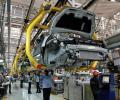
Automobile retail sales in India rose 6 per cent to 2,61,43,943 units in FY25 with rural areas performing better than urban regions across passenger vehicle and two-wheeler segments, dealers' body FADA said on Monday. The last financial year saw growth in sales of passenger vehicles, two-wheelers and three-wheelers.

Form ITR-B allows the assessee to claim TDS (tax deducted at source) and TCS (tax collected at source) credit against undisclosed income.

An hour-long disruption could affect around 40 million UPI transactions.

Sai Sudharsan upstaged some of the world's top batters as he topped the run scoring charts, while Prasidh Krishna was the most successful bowler of the season.

The Reserve Bank of India (RBI) brass, including its Governor Sanjay Malhotra, on Tuesday told a Parliamentary panel that it was "optimistic" about the impact of the US tariffs on the Indian economy and, in long-run, it could benefit the country due to dipping trade relations between the US and China.

The underrepresentation of women in the field of artificial intelligence (AI) poses a significant risk of perpetuating the prevailing societal biases into future technologies, according to a top Microsoft executive. Himani Agrawal, chief partner officer, Microsoft India and South Asia, believes that inclusion is a shared responsibility and if AI continues to be shaped without diverse perspectives, the biases of today risk becoming hardwired into the technology of tomorrow.

The stock of India's largest listed pure play retail major Trent was down 14.76 per cent at close on Monday after a fall in revenue growth for the March quarter of 2024-25 (Q4FY25). The sales growth trajectory has been in a declining trend over the last few quarters, which, coupled with falling operational metrics, higher competitive intensity, and expensive valuations, has seen the stock crack about 44 per cent since its 52-week highs in October last year.

The volume growth of India's FMCG industry has slowed down in the March quarter to 5.1 per cent, driven by increased consumer purchases of small-value packs, according to the latest report from data analytics firm NielsenIQ. Volume growth is slowing across categories, and non-food segments are still outpacing food in the FMCG sector.

'The only solution is for the government to allow us to charge a low controlled MDR of 25 bps on UPI P2M transactions only for merchants with more than a Rs 40 lakh turnover.'
European Union (EU) companies operating in India want New Delhi to streamline or remove non-tariff barriers such as Quality Control Orders (QCOs), complex Customs procedures; simplify labelling, testing, and import procedures; and facilitate cross-border digital transactions without data localisation constraints. These are results of a Business Sentiment Survey, 2025 conducted by the Federation of European Business in India (FEBI) ahead of resumption of negotiations for a free trade agreement (FTA) between both the sides scheduled to be concluded by year-end.

Non-banking entities such as fintech firms will have to tap into use cases beyond peer-to-peer (P2P) and peer-to-merchant (P2M) transactions to scale up the presence of the retail version of the central bank digital currency (CBDC), which is also known as the e, said industry players. These use cases will enable programmable transactions across domains, including the government's direct benefit transfer (DBT) schemes, with subsidies restricted to specific purposes such as food coupons, hospital bills, fertilisers, pesticides, and cross-border remittances.

Godrej Consumer Products (GCPL) had a disappointing third quarter (Q3FY25) with flat volumes (after 7 per cent growth H1FY25). Price hikes will be required to maintain margins to offset the cost of palm oil inflation. However, some analysts see Q3 as an exception with strong volume growth expected to resume and it may be the fastest growing FMCG player in FY26.

Several multinational medical device makers are focusing on deepening their presence in India by expanding their local manufacturing footprint and research capabilities, a move that can catapult India into a strategic hub for the medical technology (medtech) industry. Among those increasing their reach in the country are Siemens Healthineers and Philips, signalling a broader shift from India being only a sales destination to becoming a global production and innovation base.
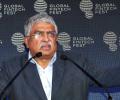
'Binary fission will happen -- startups will lead to more startups.'

The Karnataka government is planning to levy a fee of 1-2 per cent on aggregator platforms like Swiggy, Zomato, Flipkart, Amazon, Uber, etc., a government source said on Friday, adding that an announcement in this regard could come following a sub-committee meeting next week. "There is a sub-committee meeting scheduled in the coming week.

The government has imposed anti-money laundering provisions on cryptocurrencies or virtual assets as it looks to tighten oversight of digital assets. In a gazette notification, the Finance Ministry said the anti-money laundering legislation has been applied to crypto trading, safekeeping and related financial services. After this, Indian crypto exchanges will have to report suspicious activity to the Financial Intelligence Unit India (FIU-IND).

The Reliance Industries' digital services company Jio Platforms Limited has signed an agreement with SpaceX to offer Starlink's broadband internet services to its customers in India, the company said on Wednesday. The agreement is subject to SpaceX receiving authorisation to sell Starlink in India. The development came a day after Jio's rival Bharti Airtel signed a similar pact with SpaceX.

While India has become the largest data generating nation, and hosts more than 152 data centres, it is fed by only 18 undersea cables.

Wholesale price inflation eased to 2.05 per cent in March, as against 2.38 per cent in February, government data showed on Tuesday. The wholesale price index (WPI) based inflation, however, rose year-on-year.

'In this age of competition, we will not survive long if we do not provide quality service to our consumers'

India's sprawling digital public infrastructure received a glowing endorsement from billionaire philanthropist Bill Gates on Wednesday as he praised the country's "great" digital network, reliable and low-cost connectivity, and said this will be the cheapest 5G market. Under the G20 presidency of India, a session on 'Building resilient and inclusive economies- the Promise of Digital Public Infrastructure' was held on Wednesday in New Delhi, where the Microsoft co-founder spoke of India's digital identity Aadhaar, its payment infrastructure, and rapid strides that the country has taken in bringing more people into formal banking system. "India in particular, by laying the groundwork for digital public infrastucture starting with identity system, allows people to build on top of that.

India's Venture Capital (VC) ecosystem exhibited robust growth in 2024, with funding surging 43 per cent year-on-year to $13.7 billion, according to a report. This recovery was fuelled by a 45 per cent rise in deal activity, with 1,270 transactions recorded, reinforcing India's position as the second largest market for venture capital and growth funding in the Asia-Pacific region, the report by Bain & Company and IVCA said.


BMW Group India is unfazed by the prospect of Tesla entering the electric vehicle market here and feels it will help grow the segment, according to its Managing Director and CEO Vikram Pawah. The group, which sold a total of 1,249 units of electric cars in India across two brands -- BMW and MINI -- has already sold 646 units in the first quarter of 2025 and is keeping its forecast of 15 per cent of its total sales in India coming from EVs, Pawah told PTI in an interview.

Intuitively solving a problem like multiplying 43 by 11, they might first multiply 43 by 10, and then add 43, reaching the final answer of 473.

'The rise in SIP contributions has created a pool of long-term MF assets that can be pledged for loans.'

We as customers have to be conscious and careful to sidestep numerous types of frauds made possible under a mindless shift to a digital ecosystem without customer-redress procedures, warns Debashis Basu.

After cement, billionaire Gautam Adani's group and Kumar Mangalam Birla's Aditya Birla Group are set for a face-off in the wires and cable business with both conglomerates announcing forays into the high double-digit growth sector.

The only silver lining in March's performance -- which otherwise dragged down the financial year's momentum -- was a 6 per cent year-on-year (Y-o-Y) growth compared to March of the previous year. This is largely due to incentives, festival-driven gains, and new launches.

With the rapid evolution of channels like quick-commerce and the emergence of ONDC, the Indian retail industry is 'cautiously optimistic' for 2025, in which new-age technologies such as AI and automation will play a crucial role, driving efficiency and personalisation.

'There's no transparency in work (of the Wakf Board), in property transactions (of the Waqf).'

India's largest IT services firm Tata Consultancy Services on Thursday reported a 1.68 per cent dip in its consolidated net profit to Rs 12,224 crore for the March 2025 quarter. Tata Consultancy Services (TCS) - whose earnings marked the official start of IT results season - reported a total revenue of Rs 64,479 crore in Q4 FY25, up 5.3 per cent over the year-ago period.

'What is working is quality management, great teams, engineers, platforms, and highly differentiated services.'

The government on Tuesday notified the Rs 22,919 crore scheme to promote domestic manufacturing of electronics components, display and camera modules, non-surface mount devices, multi-layer printed circuit boards and lithium-ion cells for digital applications, among others. The scheme is likely to be operationalised in the next 2-3 weeks.

The Reserve Bank of India on Friday permitted banks to increase charges on ATM cash withdrawals beyond the mandatory free monthly usage by Rs 2 to Rs 23 per transaction from May 1.
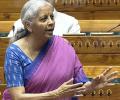
The Lok Sabha on Tuesday passed the Finance Bill 2025, along with 35 government amendments, including one that abolishes a 6 per cent digital tax on online advertisements.

From the Sensex pack, Bajaj Finserv, IndusInd Bank, NTPC, Larsen & Toubro, UltraTech Cement, Adani Ports, Bajaj Finance, Power Grid, Zomato, State Bank of India, HDFC Bank and Titan were the biggest gainers. Tata Motors tanked over 5.5 per cent after US President Donald Trump announced he would impose 25 per cent tariffs on imported cars. Sun Pharma, Kotak Mahindra Bank, Bharti Airtel, HCL Tech and Mahindra & Mahindra were also among the laggards.

India's second-largest IT company Infosys on Thursday reported an 11.7 per cent decline in consolidated net profit to Rs 7,033 crore for the March quarter. It had posted a profit (attributable to owners of the company) of Rs 7,969 crore in the year-ago period.
 © 2026 Rediff.com - Advertise with us - Disclaimer - Privacy Policy - Sitemap - Feedback - About us - Terms of use - Grievances